Pages

Saturday, February 19, 2011

Ran in city


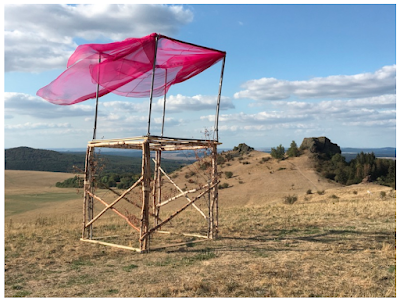
Red carpet


This idea come from my village. There side heritage home and people are alway welcome , just like their lifestyle is, simple and straight in their respective manner. They welcomed us into their homes, into their everyday universe with no hesitation but openness and hospitality that made our communication and exchange possible by something other than spoken language.

Tuesday, February 15, 2011

Identity


Each object have own identity so in this work I try to find way of identity of space dived object.

Wednesday, November 24, 2010

Saturday, October 16, 2010

A Thought Provoking Game


Activity: A Thought Provoking Game
Costs of living are escalating day by day in a developing world. People in the villages are affected as much as people in the metro cities. Social practices could be followed in the days gone by very humbly as they were affordable, and easy to execute. However, in today’s times, some traditional social practices can be a drain on the family resources and thus a burden. Fear of being ostracised by fellow community members prevents them from raising a voice as they blindly follow traditions that drive them to bankruptcy.
One such example is the traditional practice of “Shradh ceremony”, or the “Passing away” ceremony in the villages of Rajasthan which is very popular. When a family member expires, the family holds a 12 day ceremony. On the 12th day, the bereaved family holds a feast for community members. The community members are invited from nearby villages. Each household sends a family member and thus the number of unrelated members visiting the grieved family could be between 1200 to 1500 members. It can be a burden on a poor family. Children may also be married of as the ceremony involves feasting and huge expenditure is incurred anyway. This is a classic case of a social problem in rural society which believes in holding on to its age-old traditional practices, but ends up being its victim.
I belong to the same community and through my concept of the game, tries to open the minds of my fellow villagers who are religiously and blindly following a tradition that can cause more harm to a family’s integrity and wellbeing.
I hereby justify the play of polling and show my deepest concern for this regional issue. A traditional practice must be retained, but it needs to reinvent itself with the changing times in order to survive in this developing world. Else, it could be a liability and have devastating consequences on the society at large.
Importance of the “Shradh ceremony” and its Drawbacks:
Shradh is an important ceremony as it helps to divert our mind in different directions after the death of a dear one.
However, everyone does not have the money and the resources all the time. Irrespective of the financial status of a family, they are forced to hold the ceremony, by borrowing money from unscrupulous money lenders, an act that could jeopardise the existence and future of a family.
This is a curse on a society that is largely agrarian and where everyone does not have the capacity to hold such extravagant feasting ceremony.


The Concept:
My concept is a play by which I am trying to explore the minds of my fellow community members with an intention to make them think whether the rituals and process surrounding the “Shradh ceremony” benefits them and society, or is a burden. I try to find out what people think about this tradition of Shradh ceremony and also hopes to subtly pass a social message that will provoke them to rethink about this practice.
The Play: An Unusual Way of Polling
The polling game is conducted to find out if the community members support or despise the ceremony as well as their thoughts.

• Location: The village centre
• Setting: Huge community utensils used to cook the community food during the Shradh ceremony
• Participants: The village men, women and children who can comprehend and give their vote in support or against the problem

• Medium and materials:
o Liquid Earth colour dies such as Red and Yellow; each colour has significance
o Community cooking utensil called kadhav (a utensil 6 feet radius)
o Plates 4 and ½ feet deep and used in wedding ceremony
Colour significance:
Yellow – Pressurised
Yellow signifies people who are pressurised by society to follow this tradition and perform the extravagant ceremony
Red – Not Pressurised
Red signifies people who have independent powers of discretion. They are independent of social influence to act as per their own will to deal with a similar circumstance. They will not get pressurised.
Execution:
The village people assemble at the specified location and they are asked to cast their voted by
People are asked to imprint the plate with their finger prints that has a colour that signifies a vote of their choice.
People reaction:
Most people voted, however, there were also some elderly people who refused to vote as they supported the existing system. People wanted to keep their plates upside down so that their votes could not be visible to others of their community.

http://sowingseed.wordpress.com

interleave_001

Sunday, May 13, 2007

production function


This work base on recycle. It can be work on real life production function. The primary purpose of the production function is to address allocative efficiency in the use of factor inputs in production and the resulting distribution of recycle to those factors. Under certain assumptions, the production function can be used to derive a marginal product for each factor, which implies an ideal division of the recycle generated from output into an object of nature due to each input factor of production.